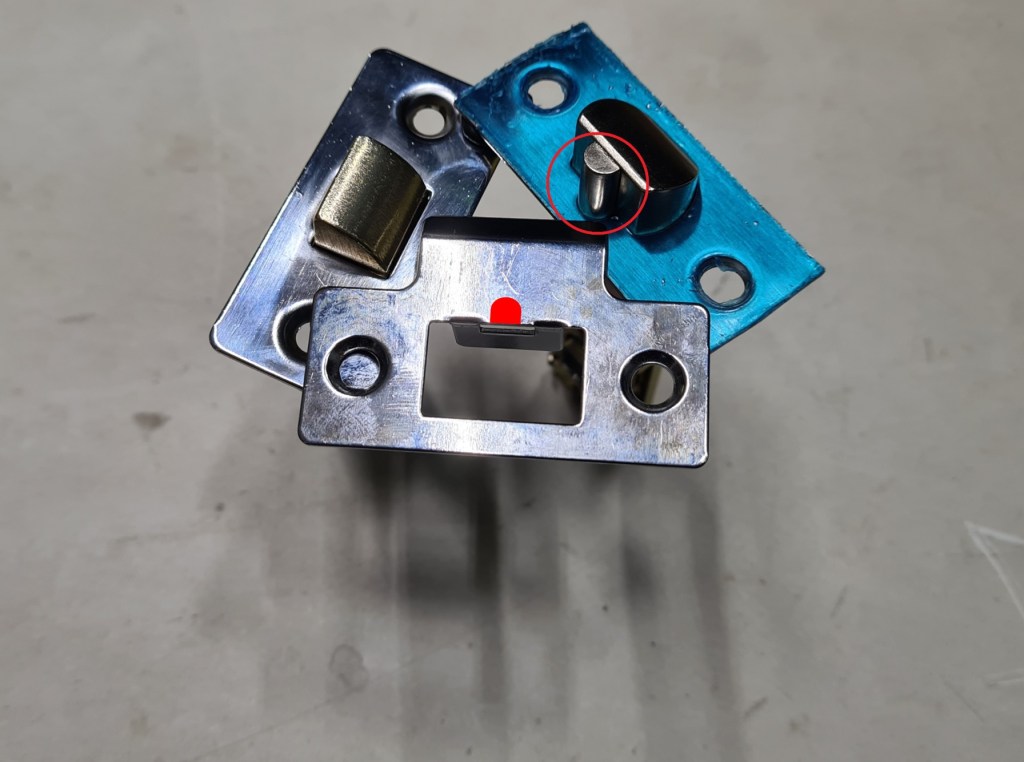
We’ve seen the difference between standard latches and those with a deadlatch plunger, but, here’s a reminder. A standard latch can be slipped as it can be pushed back when the door is closed by use of a credit card or similar. A deadlatch plunger (circled) will be depressed against the strike plate (marked in red) when the door is closed, locking the latch in place and ensuring it can’t be slipped.
But what if a security upgrade could downgrade all of these to slippable latches once again?
That is exactly what we see all the time with electrified strikes being retrofitted. They should be set up so the latch can’t be slipped but this so often isn’t the case.
It’s very common for maintenance teams to use oversized strike plates which don’t use the plunger properly, because it reduces the chance of call-backs and also makes fitting easier.
We’re seeing the same with electronic strike plates.
You can easily audit this yourself, often with some spare cutlery, a traveller hook or a slim jim (https://labs.ksec.co.uk/product-category/ksec/lockpicking/pro-pick-bypass-tools). If your latches can be moved back whilst the door is closed, take this up with your maintenance team or installer.
The usual excuse is that there are alarms and sensors in place, which is fine, but you’re now essentially relying on them because you have spent a small fortune equipping the door with PACS, only to make it more vulnerable to basic, low-skill attacks. If they say new installs will “settle”, that’s fair. But that’s a reason to schedule a revisit down the line to adjust, not a reason to install incorrectly and call it good.
All it takes is correct fitting and adjustment. You’re paying for it, get it done right.
 Styx Security