“AI This” “AI THAT!” “AI is AWESOME!”
Functionally, it’s really just a fancy predictive text model. But it’s also really useful if used properly and without thinking you’re getting Commander Data running every aspect of your business. Some businesses are going to learn that the hard way, whilst others are going to pay for their scepticism as their competitors start experimenting.
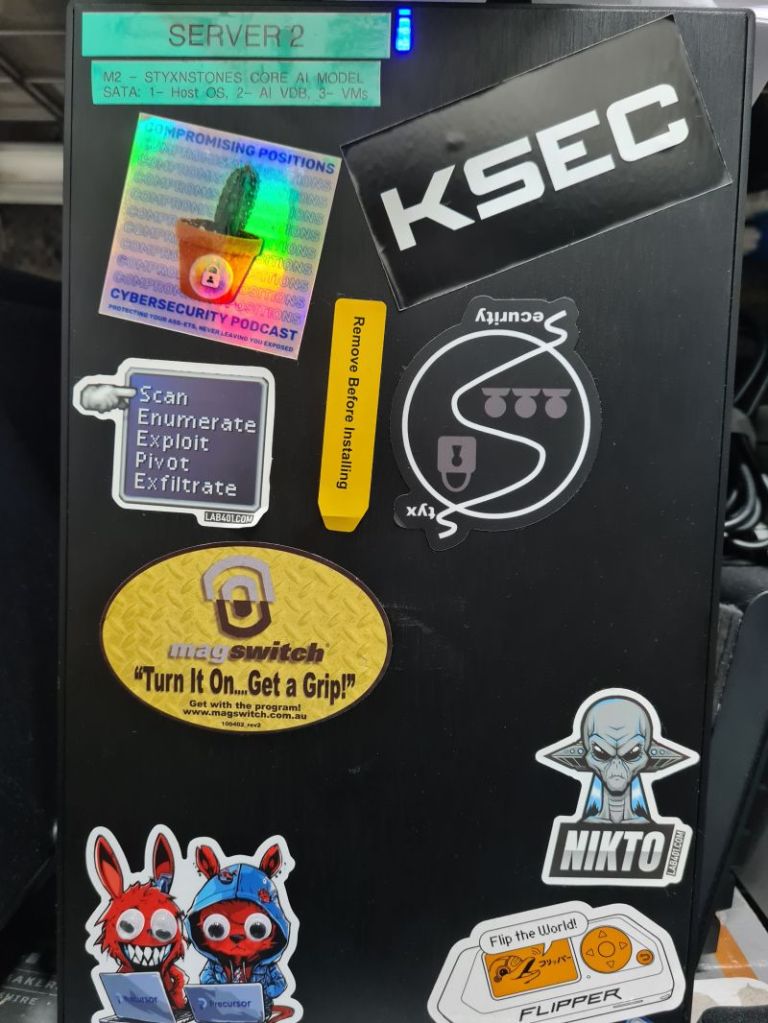
I’ve been using AI since my very first job. We have a local inference server built from spare parts and a few customised models and their associated vector databases. It is not fancy but it is entirely uncensored, potentially evil and entirely contained on our premises.
Why does a physical security company need an AI? Because you have to understand your threat so you can think like your threat. As a former Royal Marine once told me, you need to “feel their hatred”. That’s taking it a bit far, but when you can create a model that replicates the threat you’re facing, or ask Styxnstones (our custom LLM) how it would attack a target and how it would defend, it improves your coverage significantly. When this AI also has a database of several text books on covert entry, red team operations, a load of articles from HMG on physical security, etc, it becomes pretty powerful.
You’re not asking the AI for solid answers and you’re often not necessarily looking even for it to provide ideas. You’re definitely not using it to write reports. You’re using it as a sounding board to generate ideas and a way to help ensure you’re covering all angles of a problem. Especially useful if you’re struggling to find ways to understand the motivation of a particular threat.
This is one way that my reports end up being incredibly thorough and ensure we capture how a specific threat to a specific business is likely to approach the problem, rather than how a person with the limitations of morals and scruples sees the world.
 Styx Security